How Often Do You Empty Your Safe?

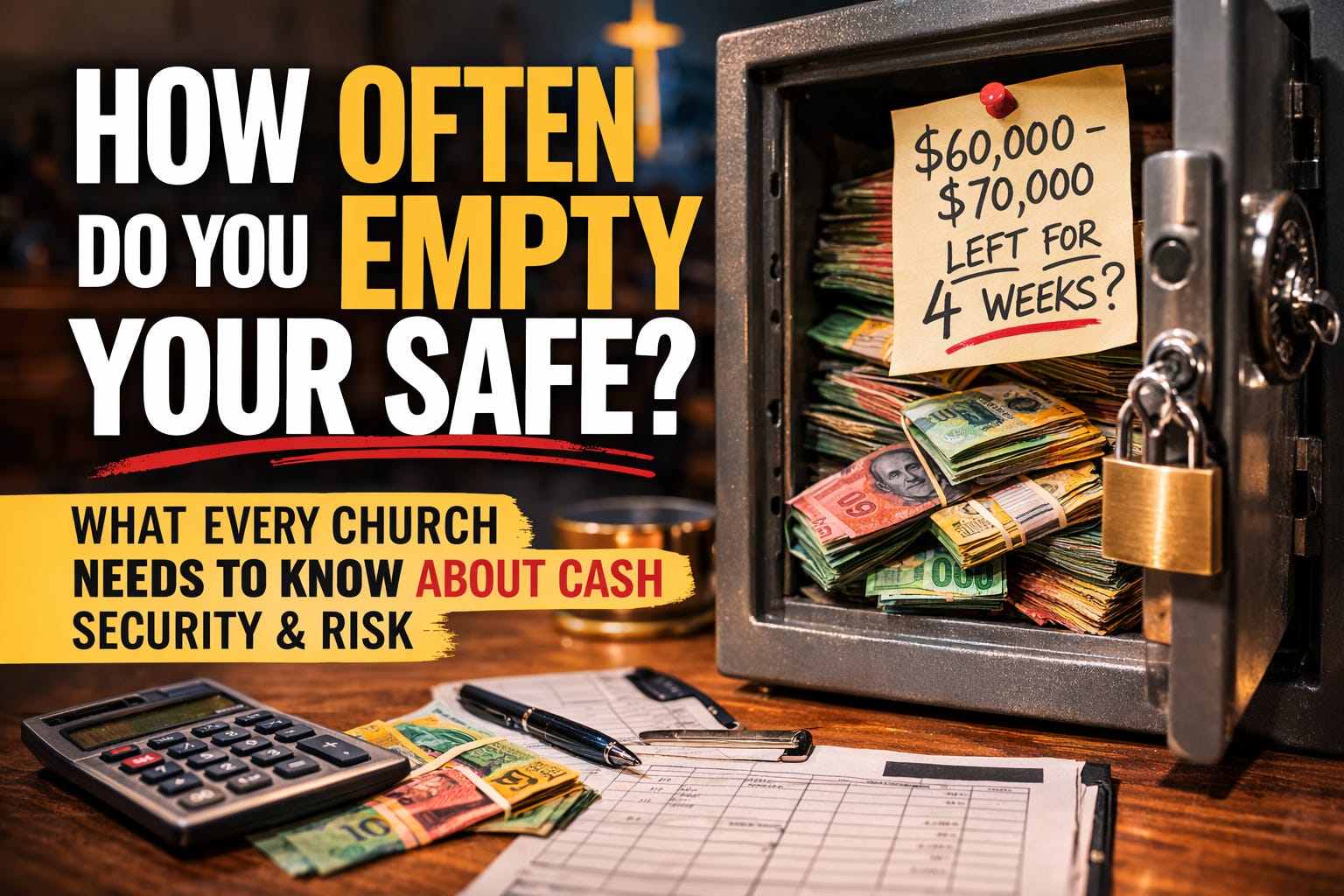
Last week, I was conducting a risk and vulnerability assessment for a church client. As part of the assessment, I asked to see the safe.
Before I go further, it is worth acknowledging that many churches hold less cash on site than they did before COVID. With online giving now far more common, the weekly offering does not always look the way it once did.
Even so, what I heard next caught my attention.
I asked, “How often do you deposit the offering and empty the safe?”
The reply was, “Once a month.”
I then asked how much cash was typically sitting in the safe before it was deposited.
The answer: somewhere between $60,000 and $70,000.
That is a significant amount of money to leave on site for four weeks. It is also a significant amount of cash for one person to transport to the bank.
So I asked the obvious follow-up, “How does the money get to the bank?”
“The treasurer drives it,” they said.
That answer should give every church leader pause.
This is not just a finance issue. It is a security issue, a stewardship issue, and a duty-of-care issue.
A church may believe the money is secure because it is locked in a safe. But the longer cash remains on site, the greater the risk. More people become aware that money is being stored there. Routines become predictable. Opportunities for theft, coercion, internal misconduct, or targeted robbery increase.
And when one person is responsible for transporting tens of thousands of dollars alone, the risk rises even further. If something goes wrong, that person is exposed physically, emotionally, and financially. That is too much burden to place on one individual.
There is a better way.
Some practical best practices churches should consider:
Count the money as soon as possible after the service using at least two unrelated people. Dual control remains one of the most reliable safeguards.
Deposit funds more frequently. Leaving four weeks of cash in a safe may be convenient, but it also concentrates risk. Weekly deposits, or even more frequent deposits when cash volume is high, are usually much wiser.
Never rely on one person to transport cash. At minimum, use two trusted individuals and vary routines where possible. No one person should carry that responsibility alone.
Consider bank cash-vault or collection services. If a church prefers monthly handling for administrative reasons, then professional collection services may be the safer option. Many banks offer solutions that reduce the need for staff or volunteers to move cash themselves.
Limit who knows the details. Churches are often open and trusting environments, which is good in many ways, but sensitive operational details should still be tightly controlled. The fewer people who know how much cash is on site and when it moves, the better.
Review your written procedures. If your cash-handling process only exists in people’s heads, that is a vulnerability. Clear policies, strong accountability, and regular reviews help protect both the church and the people serving it.
At the heart of this issue is a simple question: Are we managing church funds in the safest and most responsible way possible?
Convenience should never outrank stewardship. And trust should never replace sound process.
So let me ask you:
Is it wise for a church to leave offerings in a safe for four weeks at a time?
Would you be comfortable asking one person to transport $60,000 to $70,000 in cash to the bank alone?
What would happen if that person were followed, confronted, or accused?
And perhaps the most important question of all. Does your current process protect both the money and the people handling it?
I would love to hear your thoughts. How does your church handle cash deposits, and what safeguards do you believe are essential?
We empty it every Sunday.