From Reactive to Proactive: How Advanced Technology is Revolutionizing Physical Security

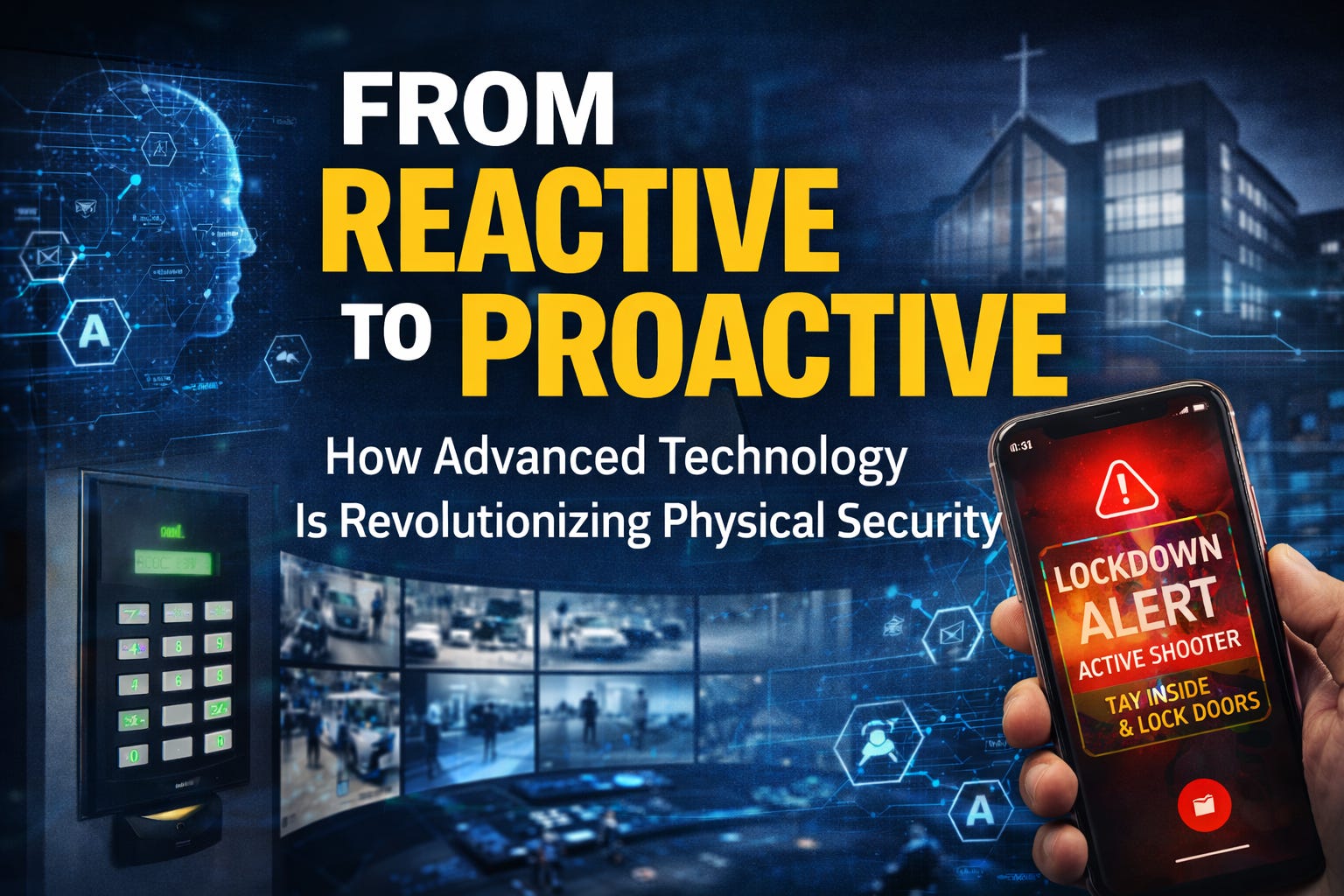
As the world becomes increasingly connected, the need for robust physical security measures has never been greater. While traditional security measures such as locks, alarms, and security personnel are still important, the integration of advanced technology has become an essential component of any comprehensive security strategy. In fact, failure to create a strategic plan to incorporate the latest security technology into your organization could result in missed opportunities to not only make your building more secure but also to make your staff more efficient.
The intersection of security technology and physical security is no longer a vision for the future - it is here now. From access control systems to video surveillance and artificial intelligence, the technology available to enhance physical security measures is rapidly evolving. It is therefore crucial that organizations stay informed about the latest advancements and take proactive steps to implement these technologies to stay ahead of security threats.
In this article, we will explore the importance of technology in the growth of physical security and discuss how integrating advanced security technology into your organization's strategic plan can make your building more secure and your staff more efficient. With working with facilities managers, business administrators and security leaders from both the non-profit and for-profit world the question gets asked where should we go next.
The Importance of Advanced Access Control Systems
Access management is a crucial component of any modern day comprehensive physical security plan. With advanced access control systems, such as facial recognition, biometric scanners, and key cards, organizations can restrict access to sensitive or restricted areas of their buildings and monitor who is coming and going. Implementing access control measures at your organization can also help organizations detect and prevent security breaches, from simple things like performing an audit to detect unauthorized access to critical or restricted parts of your building to providing access to contractors and vendors with limited permissions.
It is also becoming increasingly important in today's world of active violence. My good friend Dr. James Densley, an expert in mass shootings and co-founder of The Violence Project. His research shows that there have been approximately 188 mass shootings in the United States from 1966 to the present day where four or more people have tragically been killed. As these incidents become more frequent, access control systems can be utilized to quickly and easily lock down areas of a building, potentially saving lives in the event of an emergency. By implementing a strategic plan that incorporates advanced access control technology throughout their facility, organizations can remotely lock down buildings or zones of a building at the press of a button or better still in today’s world from your phone, potentially making the difference between life and death. In short, access management is no longer just about securing your building, it's about protecting the people inside it from harm.
Turning from Reactive to Proactive How AI is Revolutionizing Surveillance
My company Kingswood Security Consulting specializes in helping organizations with security risk assessments so they can understand their vulnerabilities and find mitigating strategies. When we travel the country to a variety of organizations we often see that have invested heavily in surveillance cameras as their primary means of security.
While cameras can be effective, they are often viewed only after a safety or security incident has occurred, leaving security teams scrambling to access the system and respond to the situation. In some cases, as I've experienced with a client who had a murder in their parking lot, no one even knew how to log into the system. That's where AI technology comes in helping you turn that small camera from being a reactive tool to a proactive one. And were not just talking about a guard watching a screen, better than that. Camera AI allows organizations to shift from a reactive approach to a proactive one. With security analytics using software like Verkada, Avigilon and Genetec organizations can receive real-time alerts for unusual behaviors that have been pre-determined by the administrator, such as movement on a certain camera or an item left in an area for an extended period. These systems can also be programmed to send alerts when someone attempts to access a restricted area without proper authorization. For example, when a terminated employee attempted to re-enter a client's building and made his way to the VP of Operations' office, the surveillance system used AI to detect him on camera from a photograph after his picture had been uploaded to the system with the command “find me”. When it found him entering the building it then sent a real time alert to the security team's phones and computers so they could intersect the person before he could cause harm. By leveraging AI-enhanced analytics, organizations can take a more proactive approach to security, making their buildings and the people inside them safer and more secure.
How Mass Notification Systems Can Help Keep Your Organization Safe
One technology that is bridging the gap between physical security and security technology is the advancement of the mass notification system. This system can be used in two primary ways to enhance security measures. First, in conjunction with access management systems, mass notification can inform your organizational members of what danger is confronting them using pre-determined responses already entered into the system. Second, mass notification can be used to alert off-site leadership and team members who need critical information during an emergency or crisis. For example, after the tragic 2017 shooting at First Baptist Church in Sutherland Springs, Texas where 26 people lost their life. The pastor was alerted to the situation through text messages and news reports while he was away on a retreat. If the church had a mass notification system in place, important information could have been shared more quickly with both the pastor and other leaders who may not have been present before the news and media start to swarm the organization seeking a comment. Mass notifications can also be used as warnings, such as in the case of severe weather or an active assailant. By utilizing mass notification systems, organizations can take a proactive approach to emergency preparedness, ultimately making their buildings and the people inside them safer and more secure.
What's Your Next Step in Advancing Your Organization's Security Technology?
As we've explored, the integration of advanced security technology has become a critical component of any comprehensive physical security plan. From access control systems and AI-enhanced surveillance to mass notification systems, the technology available to enhance security measures is rapidly evolving. It's essential that your organization stays informed about the latest advancements and take proactive steps to implement them staying ahead of potential security threats.
Now, the question is, what are you going to do this year to improve the security technology so that you can be more proactive and better prepared?